
Lukas Sjöman built an 11-metre boat entirely by himself and proved that solar power, electric propulsion and smart design can transform a simple DIY project into a real journey covering thousands of nautical miles.
What if a yacht could travel for thousands of nautical miles without ever needing to look for a fuel station?
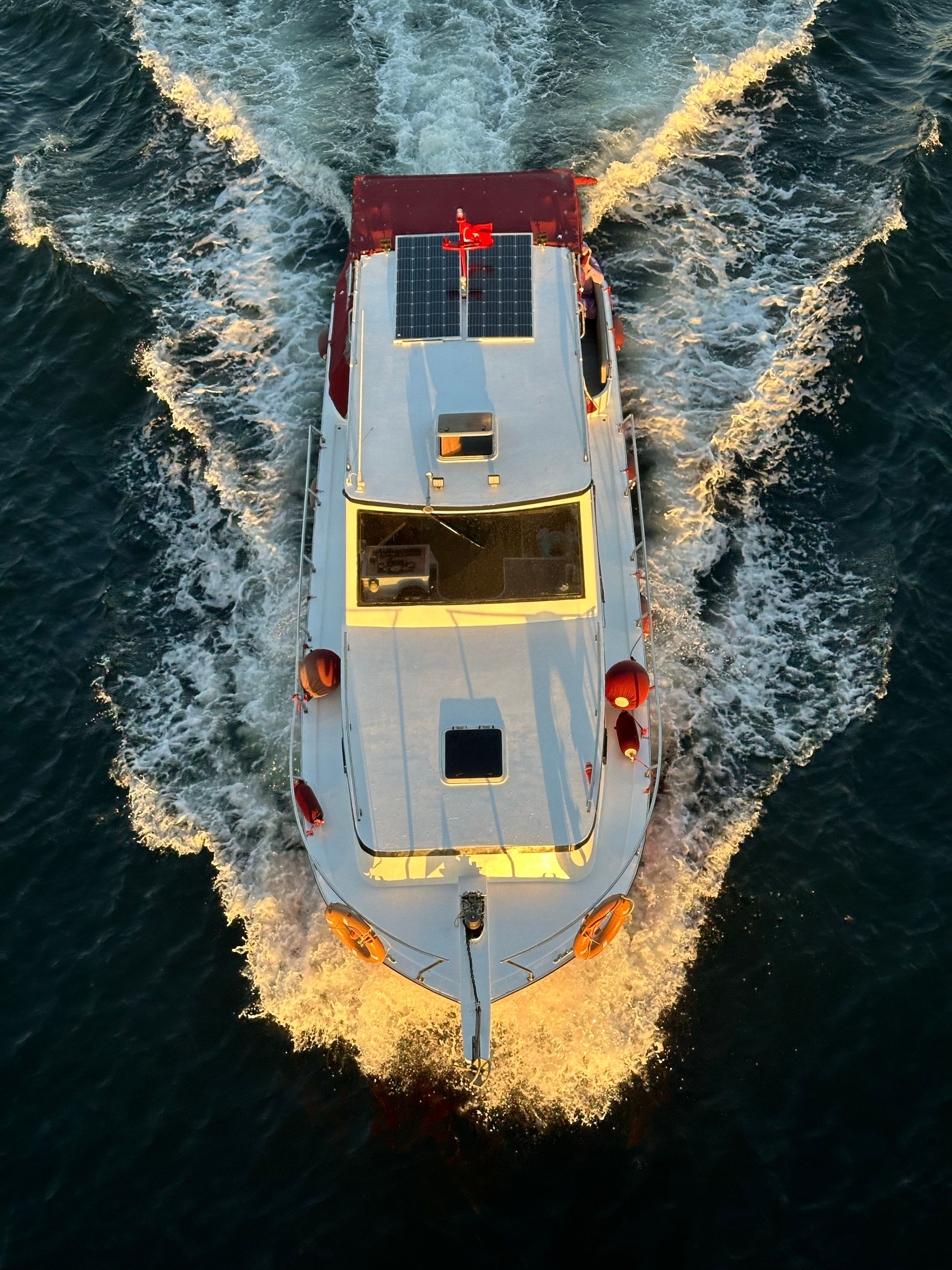
That is exactly what Finnish builder and sea enthusiast Lukas Sjöman set out to test in practice when he created the Helios 11. A handcrafted vessel approximately 11 metres long, combining solar panels, electric propulsion, batteries and an auxiliary sail, it demonstrates that sustainable boating is no longer simply a vision of the future.
200 Days, a Workshop and a Big Dream
The story of the Helios 11 begins far away from major shipyards and glamorous yacht shows.
Sjöman spent approximately 200 days building the vessel, using mainly marine plywood and fibreglass. His philosophy was very different from that of a conventional yacht.
He was not trying to create a heavy boat with a powerful engine capable of meeting every possible energy demand. Instead, he started from the opposite direction:
How can I require as little energy as possible?
The answer was a lightweight, efficient vessel designed around electric propulsion and energy generation from the sun.
When the Sun Becomes… Fuel
Installed on the roof of the Helios 11 are solar panels with a total output of approximately 6 kW. The energy generated is stored in the batteries and then used to power the electric motor.
The system is complemented by an auxiliary sail. When weather conditions allow, the wind takes over part of the work, further reducing the vessel’s electricity consumption.
And this is where the essence of the project lies.
The Helios 11 does not rely solely on the energy already stored in its batteries. It continuously generates energy throughout the journey.
The more energy produced by the sun and wind—and the more carefully speed and consumption are managed—the longer the vessel can remain at sea.
It is therefore not simply an electric boat.
It is a small, mobile energy system.
3,000 Nautical Miles to Ibiza
The real test came when Sjöman decided to leave Finland behind.
With the Helios 11, he embarked on a journey that would eventually take him all the way to Ibiza, covering approximately 5,700 kilometres, or more than 3,000 nautical miles.
The route passed through countries in Northern and Central Europe before reaching the Mediterranean, with the vessel travelling through both coastal waters and inland rivers and canals.
The journey was particularly demanding, as it began in a region where the available hours of sunshine were far from ideal.
This meant that Sjöman had to approach the journey not simply as a trip from one port to another, but as a continuous exercise in energy management.
When the sun was strong, the batteries could recharge. When conditions became more challenging, speed was reduced and the sail came into play.
The sea, the sun and the wind effectively became part of the propulsion system.
Not “Magical” Unlimited Range
The term “unlimited range”, often associated with the Helios 11, requires some clarification.
The vessel cannot travel independently of weather conditions or energy consumption. Its range is influenced by sunlight, wind, sea conditions, load, speed and the overall management of energy.
The real innovation lies elsewhere:
The vessel is capable of replenishing a significant part of the energy it consumes while travelling.
This completely changes the way we think about the range of an electric boat.
On a conventional yacht, the logic is simple: you consume fuel and, at some point, you have to refuel.
With the Helios 11, the logic becomes:
travel – generate energy – store – consume – continue.
A $20,000 Yacht?
Perhaps the most impressive aspect of the story is the cost of the project.
The Helios 11 has been reported to have been built for approximately $20,000, an exceptionally low figure when compared with the cost of modern yachts.
Of course, the construction cost of a DIY project should not be compared directly with the commercial price of a professionally built yacht.
Nevertheless, the message remains remarkable.
Sjöman demonstrated that with the right design, personal labour and careful selection of materials, it is possible to create a genuinely functional large vessel without the need for an enormous budget.
The New Era of Electric Boating
The Helios 11 is not going to replace conventional yachts overnight. That is not the point.
Its real value lies in the fact that it represents an experiment conducted under real-world conditions.
For years, electric propulsion at sea was mainly considered a solution for small boats, lakes, rivers and short-distance journeys.
Projects such as the Helios 11 demonstrate that the conversation can go much further.
And most importantly, the answer does not lie simply in larger batteries.
It lies in the combination of:
lightweight construction + an efficient hull + electric propulsion + solar energy + batteries + sail power + intelligent energy management.
From a DIY Project to the Next Generation of Boats
The Helios 11 is more than just an unusual boat that managed to travel from Finland to Ibiza.
It is a message to the marine industry.
At a time when fuel costs, environmental requirements and the need for more sustainable navigation are increasingly in focus, the idea of a vessel capable of generating much of the energy it needs becomes ever more interesting.
Lukas Sjöman did not create the biggest, fastest or most luxurious yacht.
He created something that may be even more important:
a boat designed not to consume more, but to need less.
And after successfully crossing Europe and reaching Ibiza without conventional fuel, the next question becomes even more interesting: